Global AI Summit Reaches Breakthrough Agreement on International Safety Guidelines

Global AI Summit Reaches Breakthrough Agreement on International Safety Guidelines — Primary reporting via Reuters.
Delegates from more than forty nations alongside leading artificial intelligence research institutions have finalized an unprecedented multilateral agreement establishing binding safety testing protocols for next-generation frontier models. The accord, concluded following four days of closed-door deliberations in Geneva, marks the most comprehensive global consensus on artificial intelligence governance to date.
Under the agreed terms, foundation model developers must submit high-capability models to independent red-teaming evaluations before commercial release. The framework introduces standardized risk thresholds focusing on critical infrastructure vulnerabilities, synthetic biology hazards, and automated cyber warfare defenses. Compliance will be monitored through newly chartered national safety institutes operating under common testing benchmarks.
"We have reached a critical juncture where innovation and public protection must proceed in tandem," stated Elena Rostova, European Commissioner for Digital Sovereignty. "This agreement demonstrates that democratic nations and technological leaders can forge actionable safeguards without stifling competitive dynamism or scientific discovery."
While industry leaders from major tech conglomerates broadly commended the framework as a balanced compromise, several civil liberties organizations expressed reservations regarding enforcement mechanisms. Critics argued that voluntary reporting provisions for non-frontier architectures leave significant regulatory gray zones that could be exploited by unregulated offshore entities.
Related Intelligence & Cross-Coverage
Discovered via high-dimensional semantic vector search (pgvector)

AI could kill all humans in next decade, warn experts: but how seriously should we take them?
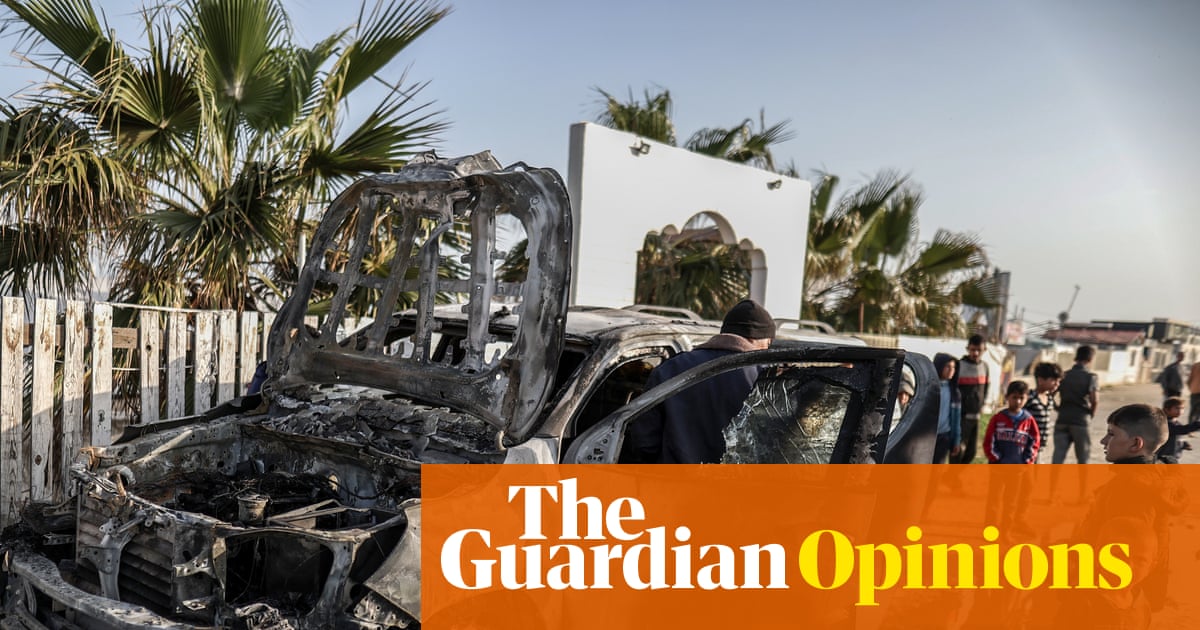
Seven of my colleagues were killed in Gaza. There and in Ukraine, aid workers are no longer safe | José Andrés

‘We can’t stop for a second’: the centre tracking South Korea’s stalkers in real time